
Heat Shrink
Dual-wall Adhesive Heat Shrink
Dual-wall adhesive heat shrink for waterproof sealing, connector protection, wire-exit insulation and strain relief in harness and cable assemblies.
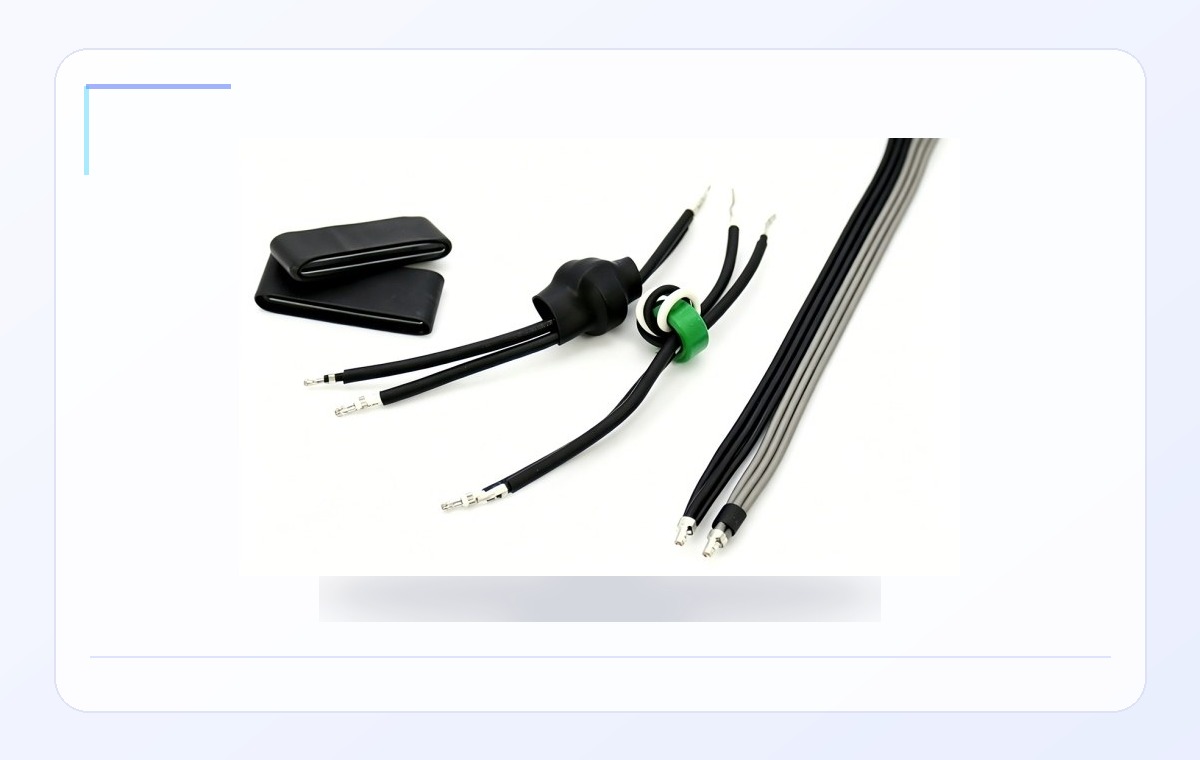 Heat Shrink
Typical Parameters
| Parameter | Typical value |
|---|---|
| Material | Polyolefin with hot-melt adhesive |
| Working temperature | -45 C to 125 C |
| Voltage / dielectric | Dielectric strength >=15 kV/mm, volume resistivity >=10^14 ohm-cm |
| Size range | 2:1 / 3:1 common ratios |
| Structure | Dual-wall adhesive-lined heat shrink tube |
OEM note: Detailed size table, validation data and custom packing can be confirmed by project.
Why this product
- Designed for dual-wall adhesive heat shrink projects that need both insulation and moisture sealing.
- Helps engineering teams protect connectors, terminals and branch exits exposed to water, oil or vibration.
- Useful for sourcing evaluation of shrink ratio, adhesive performance and wire-exit sealing reliability.
Typical applications
- Automotive and EV connector sealing
- Wire harness branch points, cable repairs and terminal exits
- Industrial equipment and outdoor electrical protection projects